

Adverse Childhood Experiences in Adult Relationships: Why Staying Connected Feels Hard
When we experience stress, chaos, or hurt during childhood, it leaves a mark. In psychology, these early difficult experiences are called Adverse Childhood Experiences, or ACEs for short.

Schema Therapy vs CBT: Understanding the Differences
When exploring therapy options, many people come across two well-established approaches: Cognitive Behavioural Therapy (CBT) and Schema Therapy. While both are evidence-based and effective for a range of emotional difficulties, they differ in their focus, depth, and therapeutic process.

Why is it so Hard to Just Rest? The Hidden Guilt of Doing Nothing
Have you ever finally sat down on a Sunday afternoon to do absolutely nothing, only to find your mind racing with anxiety? Instead of feeling refreshed, you feel an uncomfortable itch. A quiet voice inside whispers, "You should be doing something productive right now."

Understanding Attachment Insecurity in Adult Relationships
Attachment insecurity can influence how we experience closeness, trust, conflict, and emotional safety in relationships. Some people find themselves worrying about rejection, seeking constant reassurance, pulling away when relationships become emotionally intense, or struggling to trust others despite wanting connection.

Practical Ways to Disconnect and Reclaim Your Life Outside of Work
Once we recognize that our self-worth has become tangled up with our productivity, the next question is simple: How do we actually stop?

Why Do I Keep Repeating the Same Relationship Patterns?
Do you find yourself experiencing the same challenges in relationships, even with different people? Many adults notice recurring patterns such as fear of rejection, emotional withdrawal, people-pleasing, conflict avoidance, or choosing partners who feel emotionally unavailable.

The Unseen Burden: Eating Disorders and Trauma in the LGBTQ+ Community
When we talk about eating disorders, the public conversation often focuses on a very narrow stereotype. But the reality is that eating disorders and body image struggles disproportionately affect the LGBTQ+ community.

What Is Schema Therapy? A Beginner’s Guide for Adults in Sydney
Schema therapy is an evidence-based therapeutic approach that helps people understand and change long-standing emotional and behavioural patterns that may be affecting their relationships, wellbeing, and sense of self. By exploring the deeper origins of these patterns, schema therapy can support lasting change, greater self-understanding, and healthier ways of relating to yourself and others.

Understanding Adverse Childhood Experiences: How Our Past Shapes Our Present
When we grow up in an environment where our boundaries aren't respected, where emotions are unpredictable, or where trust is broken, our young minds have to adapt. We learn specific ways to protect ourselves.

Beyond Everyday Stress: How Trauma-Focused Cognitive Behavioural Therapy Helps You Heal From the Past
At The Psychology Alley, we use Trauma-Focused Cognitive Behavioural Therapy (TF-CBT). This specialised approach goes beyond standard talk therapy to help children, teenagers, and adults safely process traumatic memories and reclaim their lives.

Tired of Managing Multiple Labels? How the Unified Protocol Treats the Root of Emotional Struggles
At The Psychology Alley, we use an approach called the Unified Protocol (UP) for Transdiagnostic Treatment of Emotional Disorders. This is a modern form of Cognitive Behaviour Therapy (CBT).

Surviving is Not the Same as Living: Understanding Complex PTSD and STAIR Therapy
At The Psychology Alley, we use a specialised, evidence-based approach called STAIR (Skills Training in Affective and Interpersonal Regulation) to help individuals move beyond mere survival and actually reclaim their lives.

How to Help Someone with Depression ?
Supporting someone with depression can feel overwhelming, especially when you’re unsure what to say or do. The most helpful approach is often not about fixing the problem, but about being present, listening without judgement, and encouraging gentle steps towards support. If needed, seeking help from a psychologist near you for depression and anxiety or a clinical psychologist in Sydney can provide structured care for both the individual and their support network.
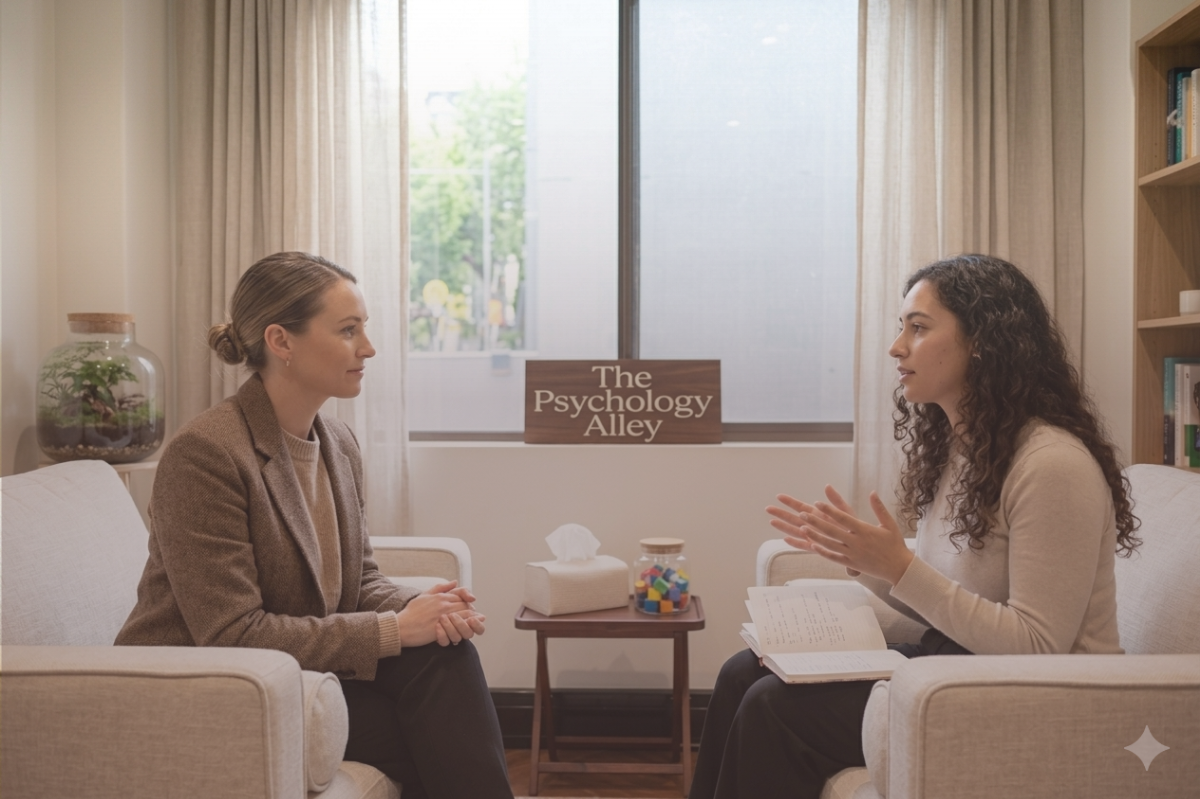
Do You Need a Referral to See a Psychologist in Australia?
You do not need a referral to see a psychologist in Australia. You can book directly with a psychologist, including a clinical psychologist in Sydney, as a private client.

How to Calm Down When Emotions Feel Overwhelming
When emotions feel overwhelming, they can quickly take over your thoughts, body, and reactions, making it difficult to think clearly or respond in ways that align with your values.
What Happens During a Family Court Psychological Assessment? A Step-by-Step Overview
Navigating family law proceedings can feel overwhelming, particularly when decisions involve children, parenting arrangements, or complex family dynamics.

What Is a Single Expert Report in Family Law? A Plain-Language Guide for Australian Families
Navigating family law proceedings can feel overwhelming, particularly when decisions involve children, parenting arrangements, or complex family dynamics.
High‑Functioning Anxiety: Signs, Causes, and When to Seek Support
High‑functioning anxiety is often described as the kind of anxiety that hides in plain sight. On the outside, a person may appear organised, capable, reliable, and calm.

What to Expect When Seeing a Clinical Psychologist in Sydney for the First Time
Meeting a clinical psychologist in Sydney for the first time can feel like a meaningful step—one that often brings a mixture of relief, uncertainty, and quiet hope.

What is a Single Expert Witness in Family Law?
A Single Expert Witness is an independent professional appointed to provide the Federal Circuit and Family Court of Australia (FCFCOA) with an objective, clinically informed assessment of the family unit undergoing separation.